
Bar & Restaurant Sound Systems in Bangalore — What You Need to Know Before You Install

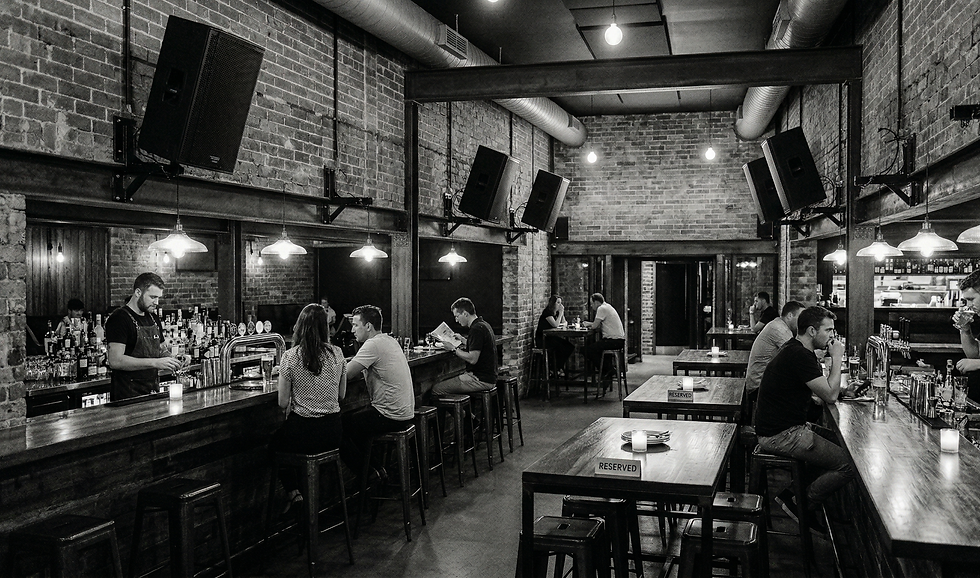
Walk into any great bar or restaurant in Bangalore and you will notice something almost immediately — even if you cannot explain it.
The music feels right. It is not too loud. It is not too quiet. Conversations flow naturally. The energy in the room feels alive. You are comfortable, you are relaxed, and without even realising it, you are staying longer than you planned.
That is not an accident. That is a well-designed sound system doing exactly what it should.
On the other hand, walk into a venue where the sound has not been thought through — music blasting in one corner and barely audible in another, distortion every time the bass hits, feedback squealing from a speaker near the door — and you feel that too. You just feel it differently.
In Bangalore's F&B market, where new bars and restaurants open every week across Indiranagar, Koramangala, Whitefield, Jayanagar, and Church Street, the difference between a venue that retains guests and one that loses them often comes down to the details. Sound is one of the most impactful details, and one of the most under-invested ones.
This guide is for bar and restaurant owners in Bangalore and across Bengaluru who are either building a new venue or upgrading an existing one and want to get their sound right — before the walls go up and the furniture goes in.
Why Sound Matters More in F&B Than Most Owners Realise
Let us start with a simple truth that the hospitality industry has known for a long time: music affects spending behaviour.
Research consistently shows that the right background music increases how long guests stay, how much they order, and how positively they review their experience. The wrong music — or poorly delivered music — does the opposite. Guests leave earlier. They feel less comfortable. The experience feels cheaper than the venue actually is.
For a bar or restaurant in Bangalore, this has a direct commercial impact. A venue that gets its audio environment right can expect higher average spends per table, better dwell time, stronger repeat visits, and better reviews — all driven in part by something as invisible as background music.
This is what we mean when we say sound is not just ambience. It is infrastructure that affects your bottom line.
The Difference Between a Bar Sound System and a Restaurant Sound System
This is where many venue owners make their first mistake — treating all F&B audio as the same problem.
A restaurant and a bar have fundamentally different audio requirements. Understanding this distinction before you invest in a system will save you significant money and frustration.
Restaurant Sound — The Goal is Comfort
In a restaurant, the audio environment exists to support the dining experience — not lead it. Guests are at your venue to enjoy a meal, have a conversation, and spend time together. The music should be present enough to create atmosphere and mask ambient noise, but never so loud that it forces guests to raise their voices to be heard.
The technical benchmark for restaurant background music is typically between 60 and 75 decibels — roughly the volume of a normal conversation. At this level, music fills the room without dominating it. The speaker system needs to deliver even, consistent coverage across every table so there are no hot spots where the music is too loud and no dead zones where it disappears entirely.
For a straightforward restaurant environment, a quality set of full-range speakers — positioned strategically across the ceiling or walls — is usually sufficient. The focus is on even distribution, warm tone, and volume control rather than raw power.
Bar Sound — The Goal is Energy
A bar is a different environment entirely. Guests at a bar are there to socialise, feel the energy of the space, and be part of an atmosphere. The music is not just background — it is part of the product you are selling.
Bar audio systems need more power, more bass presence, and more flexibility. As the night progresses and the crowd builds, the right system allows your team to push the volume up and shift the energy of the room without the audio becoming distorted or unpleasant.
This is where speaker quality and amplification matter significantly. A system that sounds clean and balanced at low volumes but distorts when pushed is not a bar system — it is a restaurant system running out of its depth.
The Hybrid Challenge — Venues That Are Both
Here is where it gets interesting, and where many of Bangalore's most successful venues operate. A modern bar-restaurant in Bengaluru is often not one thing or the other. It opens for lunch as a casual dining spot, runs as a relaxed after-work bar in the evening, and transitions into a higher-energy environment on Friday and Saturday nights.
This kind of venue needs a system that can do all three — quietly and comfortably during lunch, energetically during evening bar hours, and powerfully during weekend events. This is not a compromise system. It is a specifically designed multi-zone, flexible setup that requires proper planning from the start.
Understanding Multi-Zone Sound Systems for Bars and Restaurants
If your venue has more than one physical space — an indoor dining area, an outdoor seating section, a bar counter zone, a private room, or a terrace — you almost certainly need a multi-zone sound system.
A multi-zone system divides your venue into separate audio areas, each with its own speaker setup and volume control. This means:
Your indoor restaurant floor can have soft, warm background music while your bar counter area runs at a louder, more energetic level. Your terrace can have its own independent zone that your staff controls based on how busy it is. Your private dining room can be switched off entirely when it is not in use, or set to a completely different playlist.
This kind of operational control is what makes a venue run smoothly. Without it, your team is constantly trying to find a single volume that works for everyone — and usually failing.
A three-level venue in Jayanagar, for example, might need a cozy restaurant floor with small full-range speakers set for background warmth, a second-floor bar with full-range tops and subwoofers for high-energy audio, and a terrace with four independent audio zones plus large screens for live screenings and events. Each level serves a different guest, at a different energy level, at a different time of day. Trying to run all of that from one system is not possible. Multi-zone is not a luxury in this context — it is a necessity.
Similarly, a brewhouse in Whitefield that combines a live stage, a main dining area, and a VIP room needs a completely different sound architecture for each space. The stage area demands high-output speakers and subwoofers capable of handling live band and DJ performance levels. The dining area needs the sound to gradually decrease as guests move away from the stage — creating a natural acoustic gradient that makes both dancing and dining comfortable. The VIP room needs its own self-contained system entirely.
Key Decisions to Make Before You Install
Before you speak to any sound partner about equipment, these are the questions you need to have clear answers to.
What type of venue are you running?
Pure restaurant, pure bar, hybrid, brewhouse, lounge, cafe, fine dining, casual dining — each has a different audio requirement. Be specific about what your venue is and how it operates across different times of day and days of the week.
How many zones do you need?
Map out your floor plan and identify every distinct space that might need independent audio control. Indoor areas, outdoor areas, private rooms, bar counter zones, stage areas — each one is potentially a separate zone.
What is the acoustic character of your space?
High ceilings, glass surfaces, hard floors, and open layouts reflect sound and create echo. Low ceilings, soft furnishings, carpeting, and enclosed spaces absorb sound. Your space's acoustic character directly affects which speakers will work, where they need to be placed, and how they need to be calibrated. A site assessment before any equipment is specified is not optional — it is the starting point.
Will you be hosting live performances or events?
If your venue plans to run live music nights, DJ sets, or any kind of amplified performance — even occasionally — your system needs to be built with that in mind from day one. A background music system is not capable of handling live performance load. Retrofitting it later is expensive and disruptive.
What is your neighbourhood context?
This is particularly relevant for venues in Bangalore's residential-adjacent areas — Jayanagar, Indiranagar, HSR Layout, Banashankari. Sound management in these locations is both a guest experience issue and a compliance issue. A professionally installed system with calibrated volume limits and zone control allows you to run a great audio environment without creating problems for the neighbourhood around you.
What Good Installation Actually Looks Like
Buying the right equipment is only half the job. The other half — and the part that most people underestimate — is installation and calibration.
A professionally installed bar or restaurant sound system involves several stages that go well beyond simply mounting speakers on walls.
Speaker positioning is a science in itself. The height, angle, and spacing of speakers determines whether your venue has even coverage or uneven pockets of loud and quiet. Ceiling-mounted speakers in a restaurant need to be spaced so every table hears consistent audio. Wall-mounted speakers in a bar need to be angled to avoid reflective surfaces that cause echo and feedback.
Cable routing and concealment matters more than most owners expect — not just aesthetically but functionally. Exposed cables are a safety issue and a maintenance issue. Proper cable management, run during the construction phase, protects your investment and keeps your venue looking the way you designed it.
Calibration is what turns a system from working to performing. Every room has its own acoustic signature — the way sound behaves in your specific space, with your specific walls, ceiling height, and furnishings. A calibrated system is tuned against your room's characteristics so the audio that comes out of every speaker is balanced, clear, and consistent. This is the step that many vendors skip, and it is the step that makes the most difference to the actual listening experience in your venue.
Post-installation support is worth asking about before you commit to any partner. What happens if a speaker develops a fault six months after installation? What happens if you want to expand your system or add a zone? A sound partner who is invested in your venue's long-term performance will have clear answers to these questions.
How Entertainment Nine Approaches Bar and Restaurant Sound in Bangalore
At Entertainment Nine, we have worked with a wide range of F&B venues across Bengaluru — from small standalone restaurants in residential neighbourhoods to large multi-level brewhouses in Whitefield, multi-zone lounge bars in Jayanagar, and premium hotel bars in the city's business districts.
Each project starts the same way — with a site visit and a detailed understanding of what the venue is, how it operates, and what experience it wants to deliver. Only after that conversation do we recommend equipment, design zones, and propose a system.
We work with professional audio brands including QSC, Stonewater, and D-Audio, among others — selected based on the specific requirements of each venue rather than based on what we stock in a warehouse. This matters because the right speaker for a cozy restaurant dining floor is very different from the right speaker for a high-energy bar or a live performance stage.
Our installations are end-to-end — from initial site assessment and acoustic planning to equipment supply, installation, calibration, and post-installation support. We do not drop equipment and leave. We tune the system to your space, test it at operational conditions, and make sure your team understands how to use it before we sign off.
You can see examples of our work across Bengaluru venues on our Projects page, and explore our full range of sound services at entertainmentnine.com/sound-systems-bengaluru.
Quick Reference: Sound System Guide by Venue Type
Standalone Restaurant (Single Floor)
Full-range ceiling or wall-mounted speakers, even coverage, volume control, background music focus. Key consideration: Even distribution across all tables. No hot spots or dead zones.
Bar (Single Space)
Full-range tops + subwoofers, amplification capable of handling high volume without distortion, zone control for bar counter vs. seating areas. Key consideration: System needs to perform cleanly at both low and high volumes.
Multi-Level Bar-Restaurant Hybrid
Multi-zone system with independent level control per floor or area. Different speaker specifications per zone based on energy requirement. Key consideration: Flexibility to shift energy levels across zones as the day and night progresses.
Brewhouse / Lounge with Live Stage
High-output stage system (full-range tops + multiple subwoofers), separate lounge zone system, optional VIP room system. Key consideration: Stage system and ambient systems need to be acoustically separated so live performances do not overwhelm the dining and lounge areas.
Outdoor Terrace or Rooftop Bar
Weatherproof full-range speakers, multiple independent zones, higher output to compensate for open-air sound dispersion. Key consideration: Open-air acoustics require more speakers at lower individual volumes rather than fewer speakers at high volume.
Final Thought
A bar or restaurant in Bangalore is a competitive business. You invest significantly in your food, your interiors, your staff, and your brand. Your sound system is the part of that investment that works silently in the background — supporting every other element of the experience you have built.
Get it right and guests will not notice it consciously. But they will feel it. They will stay longer, spend more, and come back.
Get it wrong and they will notice — and so will your reviews.
If you are planning a bar or restaurant installation across Bangalore or anywhere in Bengaluru and want a site assessment before you commit to anything, reach out to Entertainment Nine.
📞 +91 99009 00433 📧 ganesh@entertainmentnine.com 🌐 entertainmentnine.com
Frequently Asked Questions
What type of sound system does a restaurant need in Bangalore?
A restaurant typically needs a background music system — full-range speakers positioned evenly across the space to deliver consistent, comfortable audio at 60 to 75 decibels. The focus is on even coverage, warm tone, and volume control rather than power. The system should enhance the dining experience without making conversations difficult.
How is a bar sound system different from a restaurant sound system?
A bar system needs more power, more bass presence, and greater volume range than a restaurant system. Where a restaurant system is designed for comfort and subtlety, a bar system needs to deliver energy and hold its quality at higher volumes. Most bars also benefit from subwoofers to give the audio physical presence, something restaurants generally do not need.
How much does a bar or restaurant sound system installation cost in Bangalore?
The cost varies depending on the size of your venue, the number of zones, and the equipment specified. A small single-zone restaurant setup is significantly less expensive than a multi-level, multi-zone bar installation with live performance capability. The best starting point is always a site assessment, which allows a proper system to be designed before any costing is done.
Do I need a multi-zone sound system for my venue?
If your venue has more than one distinct space — indoor and outdoor areas, a bar zone and a dining zone, a private room — a multi-zone system is strongly recommended. It gives you operational flexibility and ensures each area of your venue has the right audio environment for its purpose.
Can my existing sound system be upgraded instead of replaced?
In some cases, yes. If the existing infrastructure — cabling, amplification, zone controllers — is of reasonable quality, it may be possible to upgrade specific components rather than start from scratch. A site assessment will clarify what is worth keeping and what needs to be replaced.
Does Entertainment Nine handle both supply and installation?
Yes. Entertainment Nine provides end-to-end sound solutions for bars and restaurants in Bengaluru — from initial site assessment and system design through to equipment supply, professional installation, acoustic calibration, and post-installation support.
What brands does Entertainment Nine work with for bar and restaurant installations?
We work with professional audio brands including QSC, Stonewater, D-Audio, and others — selected based on the specific requirements of each project. We do not push a single brand across all venues. The right equipment depends on your venue type, size, acoustic environment, and how you plan to use the space.


Comments